

LENT REFLECTION
Lent - Second Week - Thursday
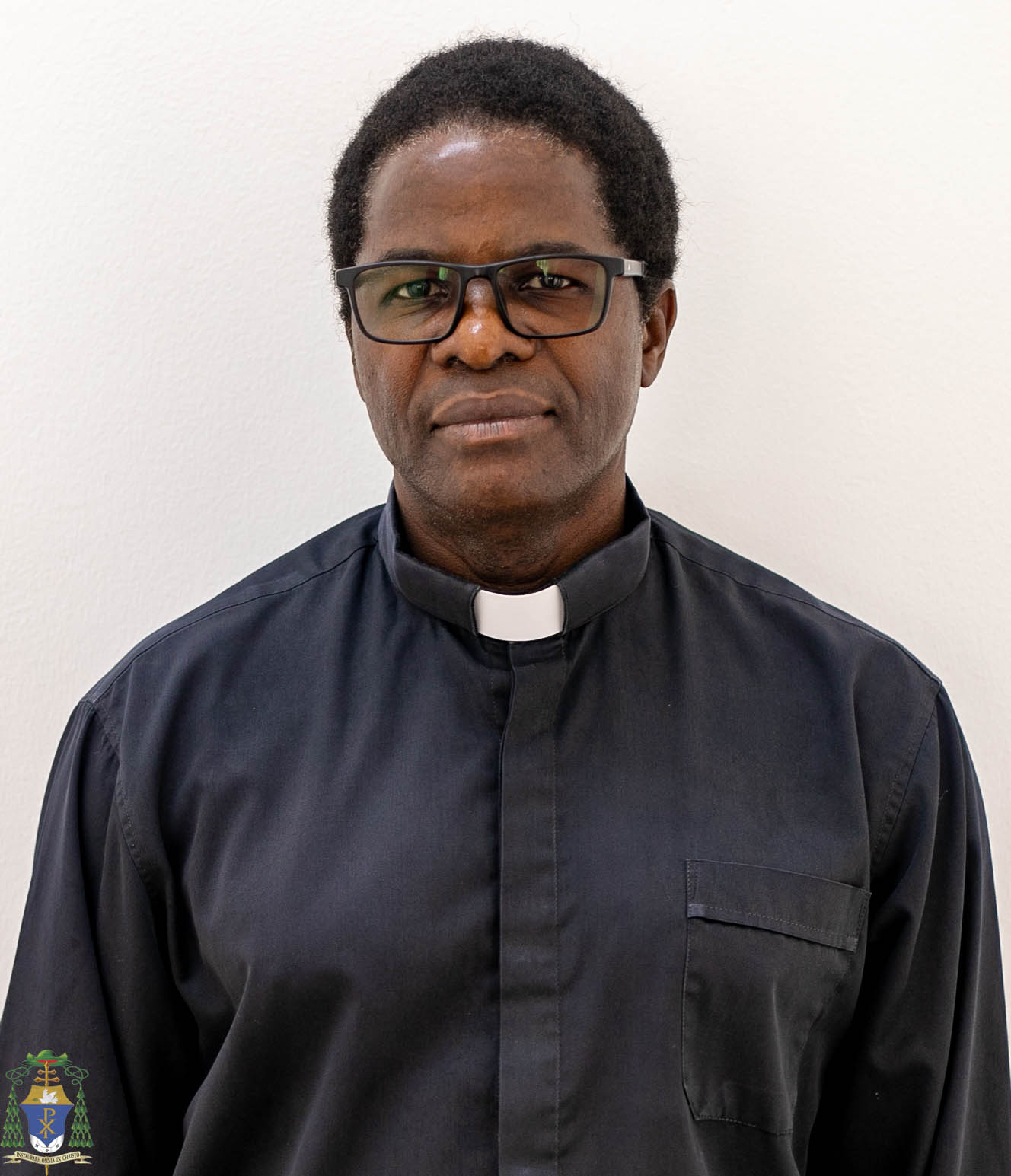
By Dc. Francis Mangeni
Luke 16:19-31
Poor Lazarus
Jesus said to the Pharisees:
“There was a rich man who dressed in purple garments and fine linen and dined sumptuously each day. And lying at his door was a poor man named Lazarus, covered with sores, who would gladly have eaten his fill of the scraps that fell from the rich man’s table. Dogs even used to come and lick his sores. When the poor man died, he was carried away by angels to the bosom of Abraham. The rich man also died and was buried, and from the netherworld, where he was in torment, he raised his eyes and saw Abraham far off and Lazarus at his side. And he cried out, ‘Father Abraham, have pity on me. Send Lazarus to dip the tip of his finger in water and cool my tongue, for I am suffering torment in these flames.’ Abraham replied, ‘My child, remember that you received what was good during your lifetime while Lazarus likewise received what was bad; but now he is comforted here, whereas you are tormented. Moreover, between us and you a great chasm is established to prevent anyone from crossing who might wish to go from our side to yours or from your side to ours.’ He said, ‘Then I beg you, father, send him
to my father’s house, for I have five brothers, so that he may warn them, lest they too come to this place of torment.’ But Abraham replied, ‘They have Moses and the prophets. Let them listen to them.’ He said, ‘Oh no, father Abraham, but if someone from the dead goes to them, they will repent.’ Then Abraham said, ‘If they will not listen to Moses and the prophets, neither will they be persuaded if someone should rise from the dead.'”
1. We are called upon today to care for the poor in our midst, through charity, social services, and policies for social-economic transformation. This we are to do promptly as our lifestyle, and not procrastinate until it’s too late. We are not to be hard-hearted, or illogical in our reasoning, by refusing the message of our Lord Jesus Christ, of love and mercy towards others, and disbelieving or refusing to accept what should be obvious. Global knowledge should harnessed and deployed for the Common Good.
2. Across the world, we have Lazarus in our midst everywhere we turn. Humankind now has the technical and financial capacity to eliminate poverty and disease in the world, and provide universal education, clean water, housing, and internet. But this capacity is ignored, is not mobilised and deployed to the effort. This may be due to inadequate public opinion and political will and leadership, and the dominance of greed and selfish power in the public and private sectors. Instead, inequality in the world is increasingly shocking, with 10 men now owning more resources than half of the global population, according to Oxfam. Human rights both political, civil, and social-economic, call for humane conditions for all people. The reality on the ground is far from humane conditions for all. All people in need also should be motivated into action, to do something about their situation. They need skills, counselling, and facilitation to launch themselves into sustainable livelihoods. Everyone has a role, by being my brother’s keeper. But above all, political careers must be seen as a calling to serve the Common Good. In Fratelli Tutti, Pope Francis “appeal[ed] for a renewed appreciation of politics as a lofty vocation and one of the highest forms of charity, inasmuch as it seeks the Common good.” paragraph 180.
3. The Bulletin of Atomic Scientists annually produces readings on the Doomsday clock, warning how close humankind is to irreparable or irreversible catastrophe or indeed total annihilation as a species or of life altogether. Currently, the existential threats to humankind include wars and conflicts across the world that could easily escalate and blow up humankind, weakening of global governance, climate change, rogue artificial intelligence, and outbreaks of pandemics. To these global threats, can be added all those specific threats in particular parts of the world that dehumanise and kill people. Poverty, illiteracy, discrimination, apathy, and lack of meaning in life. We each and everyone exist on earth as stewards of God’s creation, in all its grandeur and beauty, which is being destroyed by unbridled greed and recklessness. We each and everyone are to care for each and everyone, ensuring the Common Good.
4. The modern mind can wonder whether there is life after death, and whether there is heaven and hell. Current research in neuro-science, near-death-experiences, ongoing miracles, as well as longstanding metaphysics – all gravitate towards life after death. The fundamental issue though is that each and everyone of us dies soon or later. We do well to confront the nature of our mortality, and to be at peace with it, counting on God’s love and mercy, and wholly entrusting ourselves to Him. How then are we to live the best way possible, with God in our lives, before our death? Our Lord Jesus Christ warns us today not to live like the rich man who ignored Lazarus.
5. The resurrection of our Lord Jesus Christ is reported in history by non-Christian sources, such as in the Antiquities of Josephus, 18.1. Archeology corroborates the events. The Gospels are now reckoned to provide significant historical information in support of the resurrection. But above all, it’s our faith, anchored in solid Tradition traced back to eyewitness accounts and Apostolic testimony and proclamation, that our Lord Jesus Christ rose from the dead on the third day. But as Abraham said, some will not believe the resurrection or as a result of the resurrection. The Gospel of John was written so that we may believe (Jn 20:31) and so were the other Gospels, the Acts of the Apostles, the Letters, and the Book of Revelation. Do you really, really believe? And live accordingly?