

LENTEN REFLECTION
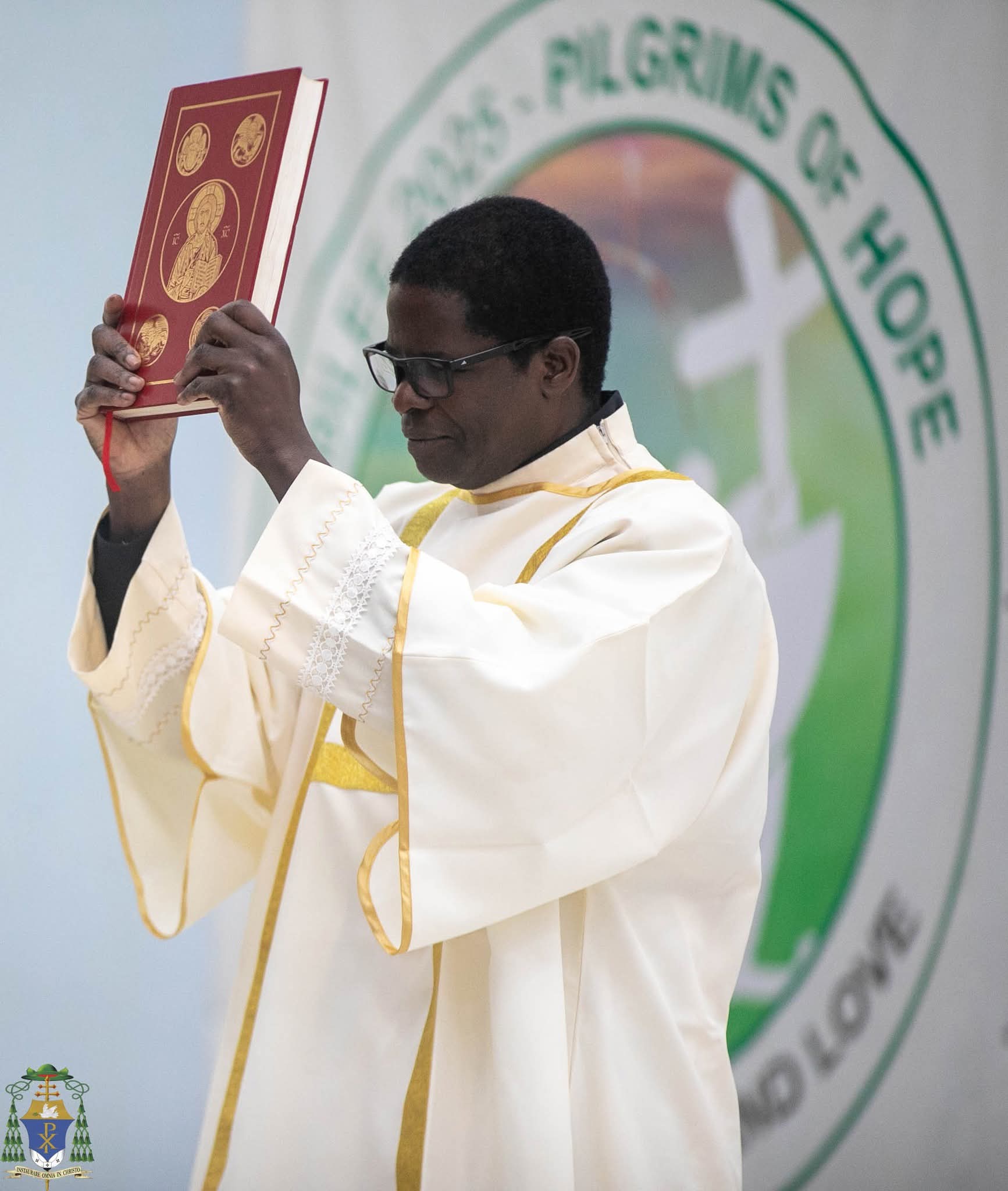
Fourth Sunday of Easter - Good Shepherd Sunday Year A –
Acts 2:14,36-41; Ps 23; 1 Peter 2:20-25; Jn 10:14; Jn 10:1-10
By Dc. Francis Mangeni
Message
As we follow our Good Shepherd, our Lord Jesus Christ, let us in turn be good shepherds to all people; in our homes, communities, the Parish, at work, in the country, the region and across the world. Let us care for one another, for the natural world, and for all creation; knowing that our Good Shepherd is God and we are made in His image and likeness, and we participate in Reason and Goodness.
Gospel Reading
John 10 “Very truly, I tell you, anyone who does not enter the sheepfold by the gate but climbs in by another way is a thief and a bandit. 2 The one who enters by the gate is the shepherd of the sheep. 3 The gatekeeper opens the gate for him, and the sheep hear his voice. He calls his own sheep by name and leads them out. 4 When he has brought out all his own, he goes ahead of them, and the sheep follow him because they know his voice. 5 They will not follow a stranger, but they will run from him because they do not know the voice of strangers.” 6 Jesus used this figure of speech with them, but they did not understand what he was saying to them. 7 So again Jesus said to them, “Very truly, I tell you, I am the gate for the sheep. 8 All who came before me are thieves and bandits; but the sheep did not listen to them. 9 I am the gate. Whoever enters by me will be saved, and will come in and go out and find pasture. 10 The thief comes only to steal and kill and destroy. I came that they may have life, and have it abundantly.
The Shepherd of Israel was the Lord God. Ezekiel 34 carries a harrowing description of bad shepherds: 3 You eat the fat, you clothe yourselves with the wool, you slaughter the fatlings; but you do not feed the sheep. 4 You have not strengthened the weak, you have not healed the sick, you have not bound up the injured, you have not brought back the strayed, you have not sought the lost, but with force and harshness you have ruled them. 5 So they were scattered, because there was no shepherd; and scattered, they became food for all the wild animals. 6 My sheep were scattered, they wandered over all the mountains and on every high hill; my sheep were scattered over all the face of the earth, with no one to search or seek for them. (Ez 34:3-6).
In response, the Lord God decides that He will be the Shepherd Himself:
15 I myself will be the shepherd of my sheep, and I will make them lie down, says the Lord God. 16 I will seek the lost, and I will bring back the strayed, and I will bind up the injured, and I will strengthen the weak, but the fat and the strong I will destroy. I will feed them with justice. (Ez 34:15-16).
Our Lord Jesus Christ says He is the Good Shepherd as He is walking in Solomon’s Portico, that is, in the King’s Portico; on the Jewish feast of the re-dedication of the Temple following the successful Maccabean revolt of about 164 BC (Jn 10:22-23). The motifs of King, purification, and liberation which the feast carried find their fulfilment and completion in our Lord Jesus Christ. He is the King; the oil and light; the one who gives the Holy Spirit that sanctifies; and the one who leads the new and permanent exodus out of sin and all defilement, to God the Father.
The message our Lord is communicating is that He is the Lord God of Israel. The Jewish authorities, that is, the bad shepherds, understood that Jesus said He is God, and rejected Him. As He says, “The Father and I are one” (Jn 10:30), at which they picked up stones to stone Him and tried to arrest Him (Jn 10:231, 39).
Our Lord Jesus Christ seeks to save His flock from the bad shepherds, that is, the bad leaders of our times and all in positions of responsibility, and will Himself be the Good Shepherd. Jesus’s indictment of irresponsible leaders, should wake all of us up. We should do some soul-searching. Are we not those bad shepherds?
As His flock, we should hear His voice and follow Him. To hear is a lifestyle and is to be Christ-like, to be ever more fully mapped to Him. We in turn are to be good shepherds, just like Him. A good shepherd is prepared to lay down his life for the flock (Jn 10:11-12). We should be merciful and forgiving, which heals us in turn (Lk 6:36).
Our Lord gives life to the full or life abundantly. In Him, we have fullness of life, beginning in the here and now. Fullness of life is when: one has joyful tranquillity, which is what peace is; one has found meaning in life, that is, what to live for and if needs be die for; when one’s deep yearnings are satisfied and one has contentment, except the enduring and joyful longing for God, known as the wound of love that the saints have experienced since the time of Moses; a ceaseless pursuit of God well into the unknow, and when knowing is the unknowing. Eudaimonia among the Greeks referred to an inner good spirit arising from a virtuous and purposeful life, with one’s potential developed and lived. In our Lord, we find the theory of everything: who we are (we are by adoption what Christ is by nature, that is, children of God, divine); why we live (to celebrate God,
living to the full, in joy and peace with ourselves as God’s own idea conceived in love in His heart, with society as God’s very beloved family, with the natural world as our gorgeous home and neighbourhood, and with our God as our loving Father); and where we are going (to God who is Love, the Creator of all that is, the Good, the source of all goodness and bliss).
To be a good shepherd by following our Lord the Good Shepherd, we should have a total conversion, a new world view: the Lord’s own worldview. In his first homily on Pentecost, St Peter called for repentance; a standing call that continues to our time, addressed to each and every one of us (Acts 2:36-41). We should be prepared to suffer, just as our Lord suffered; that is the path He has laid out for us (1 Peter 2:20-25); but that path leads to the resurrection (Rom 6:4). We can already pray and sing Psalm 23, for the Lord is our Shepherd, when we live as shepherds to His people. We dwell in God’s house, forever. That is life to the full; life in abundance (Jn 10:10):
4 Even though I walk through the darkest valley, I fear no evil; for you are with me; your rod and your staff— they comfort me.
5 You prepare a table before me
in the presence of my enemies; you anoint my head with oil; my cup overflows.
6 Surely goodness and mercy shall follow me all the days of my life, and I shall dwell in the house of the Lord
my whole life long. (Ps 23:4-6).