

LENTEN REFLECTION
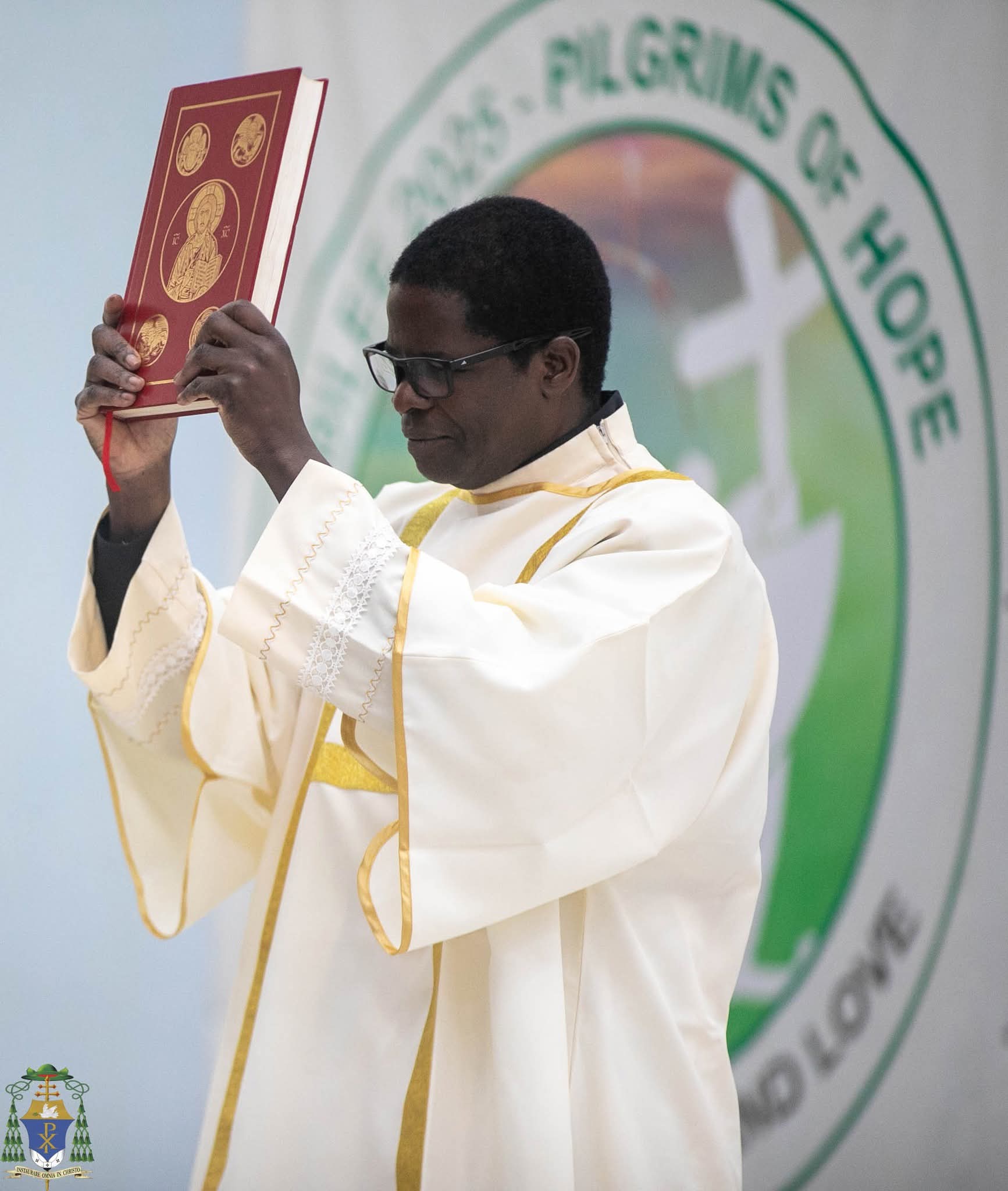
Lent Year-A II Day 25 - Have mercy on me, a sinner
Hosea 1:1-6, Ps 51, Ps 95:8, Lk 18:9-14
By Dc. Francis Mangeni
Luke 18 9 He also told this parable to some who trusted in themselves that they wererighteous and regarded others with contempt: 10 “Two men went up to the temple to pray,one a Pharisee and the other a tax collector. 11 The Pharisee, standing by himself, waspraying thus, ‘God, I thank you that I am not like other people: thieves, rogues,adulterers, or even like this tax collector. 12 I fast twice a week; I give a tenth of all myincome.’ 13But the tax collector, standing far off, would not even lift up his eyes toheaven but was beating his breast and saying, ‘God, be merciful to me, a sinner!’ 14 I tellyou, this man went down to his home justified rather than the other, for all who exaltthemselves will be humbled, but all who humble themselves will be exalted.”
What the parable teaches
That when we pray, to God, we are not to have a disposition of self-righteousness, despisingothers while gleeful about our good deeds; not at all; but rather, we should be humble, aware of ourneed for mercy, asking for mercy, then God will accept our prayer. The great reversal is ever operative:“for whoever exalts himself will be humbled, and the one who humbles himself will be exalted” (Luke18:14 cf 13:30, 14:11).Our Lord Jesus Christ teaches us that we are to pray: in a posture of reverence, with a dispositionof humility, trusting in God, asking for God’s mercy, intentionally, and undistracted. We are to pray withour body, mind and soul; in our thoughts, words and deeds; bringing and presenting all of ourselves inour entirety before God. We are not: to pray ostentatiously seeking to be seen and heard by others asbeing exemplary, to be judgmental in considering others as sinners, to boast of our good deeds evenwhere we excel and go beyond what is required of us; nor to exalt ourselves, despising others forwhatever reason.Our Lord uses a parable, telling it “to some who trusted in themselves that they were righteousand regarded others with contempt” (NRSV]/ “to those who were convinced of their own righteousnessand despised everyone else” [NAB]/ “to some who prided themselves in being upright and despisedeveryone else” [NJB]. We are not to be among the “some” or “those”; and if we are, our Lord hassomething very important to say to us, signified by the formula “I tell you” in the conclusion (14:18);that is, what our disposition should be when we pray.What the parable does not meanThe parable does not mean that we should not pray standing; it was customary then and we stilldo so, in eagerness, readiness, alertness. It does not mean that we should not raise our eyes when we2pray; we can imitate our Lord Jesus Christ (John 17:1, Psalm 123:1). Nor that we should not fast; weshould (Matthew 6:17), when aged 18 to 59; we do fast on Ash Wednesday and Good Friday (Canon1251). We do penance during Lent in preparation for the Great Liturgical Feast of Easter, and everyFriday of the year (Catechism 1438). We can fast also on Wednesdays and Fridays as our Tradition sinceApostolic times: “but you fast during the fourth day and during the Sabbath preparation day” (Didache8.1); Wednesday when our Lord was betrayed and Friday when He was crucified and died. Nor, ofcourse, does the parable mean that, unlike the Pharisee, we should try to be “thieves, rogues, adulterers”[NRSV]/ “greedy, dishonest adulterous” [REV, NAB]/ “grasping, unjust, adulterous” [NJB] (14:11) –adultery or prostitution in Hebrew Scriptures also included idolatry and unfaithfulness to God (Hosea1, Ezekiel 68). Scripture is unequivocal that these are all to be avoided: “sexual immorality, theft,murder, adultery, avarice, wickedness, deceit, debauchery, envy, slander, pride, folly” as things thatdefile a person (Mark 7:21-22); or: “sexual immorality, impurity, debauchery, idolatry, sorcery,enmities, strife, jealousy, anger, quarrels, dissensions, factions, envy, drunkenness, carousing, andthings like these” as works of the flesh (Galatians 5:19-21). The counter to such is to have the mind ofChrist (Phil 2:5), and the fruit of the Spirit, when we live in the Spirit: “love, joy, peace, patience,kindness, generosity, faithfulness, gentleness, and self-control” (Galatians 5:22-23); as grace and ashabit.The gravity of the momentThe pharisee and the tax collector went to the temple for daily public prayer during the time forthe atonement sacrifice and incense offering, which was at 9 in the morning and 3 in the afternoon; thevery moment that the people of Israel were to be praying for expiation of their sins. It is at this momentthat the Pharisee prays about himself, thinking of himself, as exclusively better than “other people”[NRSV]/ “the rest of mankind [REV]/ the rest of humanity” [NAB]/ “everyone else” [NJB], whom heconsiders woefully sinful (v.11). He scornfully gestures at the tax collector, before God. He confidentlyboasts and shows off about his righteous deeds and being upright: “I fast twice a week, I pay tithes onall I get” (v.12), with no need for God at all. He stands away from the others in the temple, to be seenclearly, but speaks audibly to be heard by them. Jesus is not just making all this up. Some rabbis wereknown to pray like that, for instance, in the Talmud, Berakot 28b, or Sukka 45b: “I am able to exemptthe whole world from judgment from the day that I was born until now”, or “I have seen the sons ofheaven and they are but few. If there be a thousand, I and my son are among them; if a hundred, I andmy son are among them; and if only two, they are I and my son”.This makes the prayer of the tax collector at that moment of atonement so pertinent: “Bepropitiated toward me, the sinner” (Luke 18:13). He seeks expiation of his sin. He considers himselfthe sinner [IB] (some versions render this as “a sinner”). He does not consider himself better than others.He stands at a distance, daring not to even “raise his eyes to heaven”, but “beat[s] his breast”. By this3detail, Our Lord Jesus Christ indicates the need for reverence and humility, as prayer postures, andcontrition for sin as the proper disposition.What God made of it allOur Lord Jesus Christ refers to the tax collector intimately as “this” man, and to the pharisee as“that” man [IB, NRSV, REV, NJB]. The tax collector went home justified, and not the pharisee. Godheard and granted the tax collector’s prayer.The pharisee prayed in a manner diametrically contrary to the Lord’s Prayer, which our Lordtaught us: we pray as “we”, saying “Our” both in the salutation and for all the petitions; we pray to Godas our “Father”, recognising our bond and common identity as His children (by adoption in baptism);we seek His Kingdom, we ask Him to provide for our daily needs including the Eucharist, to forgiveour sins, we already forgive others, we ask for strength in moments of temptation, and for protectionfrom evil (Luke 11:1-4, Matthew 6:9-13). The pharisee prayed as “I”, saying “I” five times over a meretwo verses, reciting how he had done far more than the Law required, on fasting and tithing (Luke18:11-12)! He was quite proud.Yet, as our Lord said, we should consider the wondrous deeds we perform even with faith thesize of a mustard seed, and what we perform in service of God and others, to be our duty, rather than tobe thanked and rewarded (17:6,10). Our Lord presents the tax collector as our model for praying.This parable presents to us our loving and merciful God, who hears the “cry of the oppressed”,“the wail of the orphan”, “the complaint” of the widow, and “the one who serves God willingly”; “theprayer of the lowly pierces the clouds” (Sirach 35:17-21). On our part, as St Paul was, we are to bepoured out as a “libation” to God (2 Timothy 4:6). We are entirely to be an offering to our God. We areto live only to praise, reverence and serve God, finding God in all things (St Ignatius).How to pray without ceasingIn The Tale of a Pilgrim – How he acquired the gift of interior unceasing prayer of the heart, thepilgrim tells us what he learnt:We entered his cell and the elder began to say the following: "The unceasing interior Jesusprayer is an uninterrupted, never dying invocation of the divine name Jesus Christ with themind and the heart, all the while imagining his ongoing presence and asking for his pardon,during all occupations, in every place, at all times, even in sleep .... The prayer is expressedin the following words: Lord Jesus Christ, Son of God, have mercy on me. Those whoacquire the habit of this invocation will experience great consolation and will always saythis prayer. As a result they will be unable to live without the prayer, which of its ownaccord will speak itself in them. Now do you understand what unceasing prayer is?" (p. 60)