OBITUARY
OBITUARY
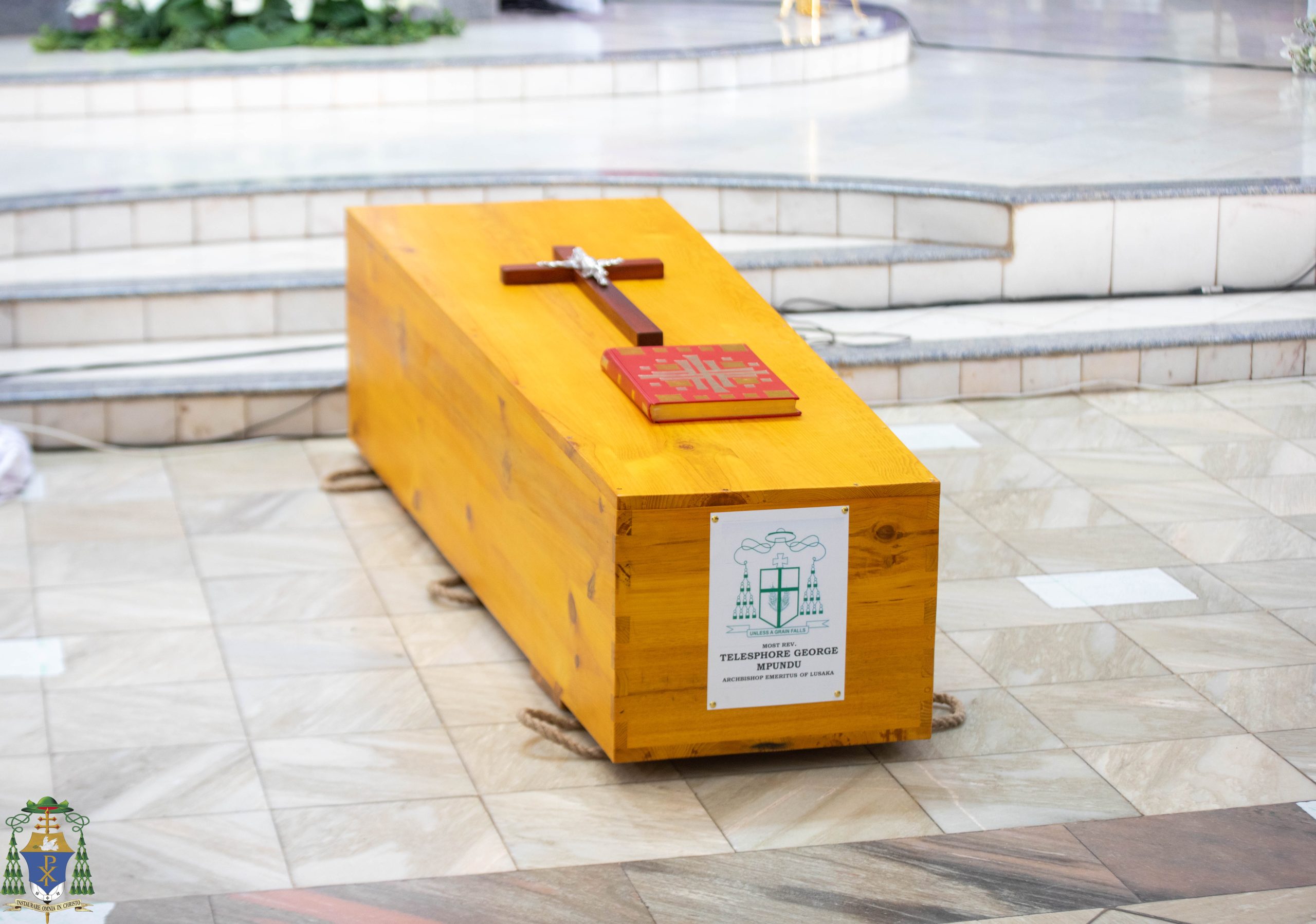
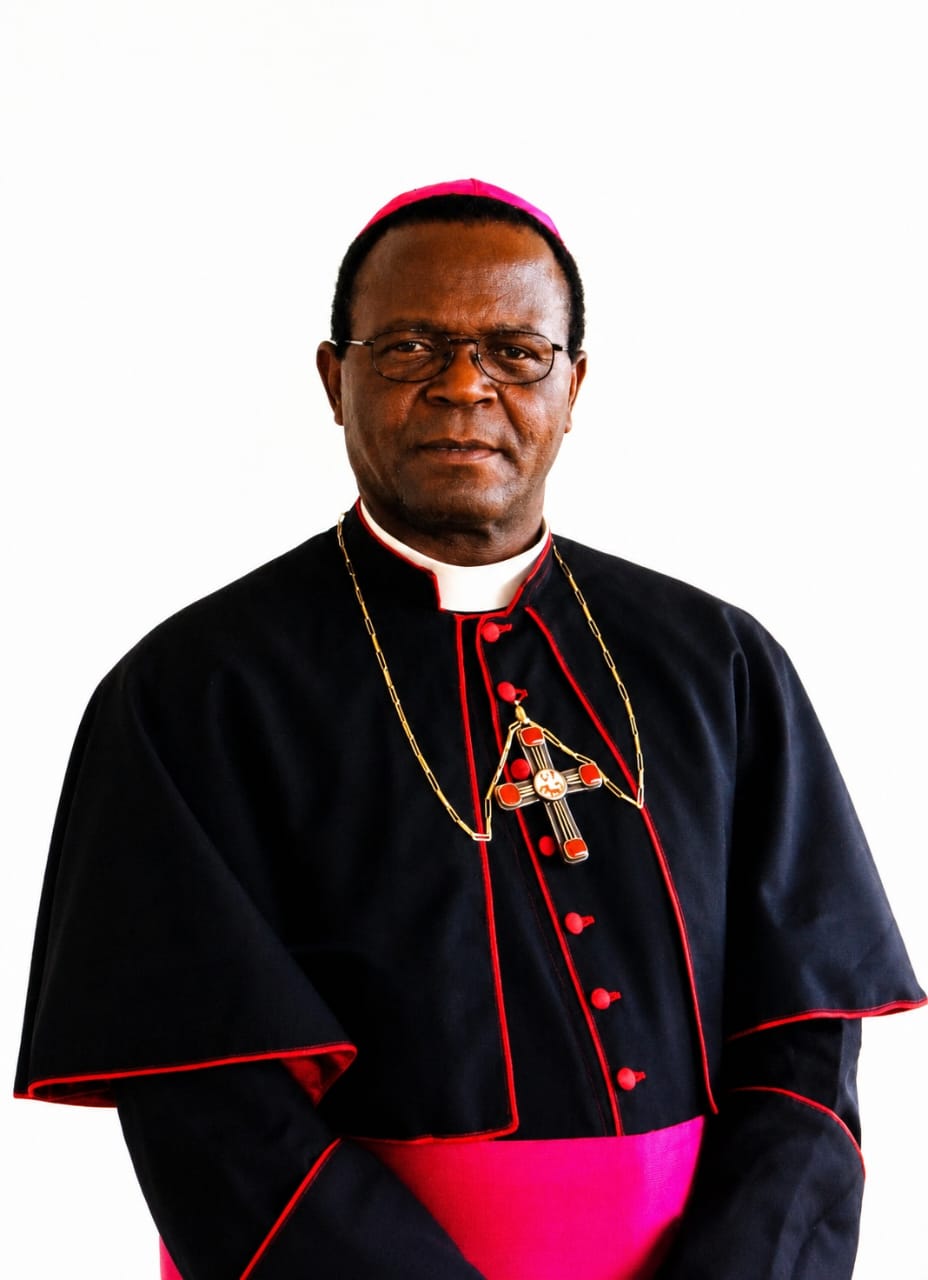
MOST REV. GEORGE TELESPHORE MPUNDU
EMERITUS ARCHBISHOP OF LUSAKA
Archbishop Emeritus Telesphore George Mpundu was a rare blend of wisdom, courage, humility, and humour, a shepherd whose life reflected both the seriousness of the Gospel and the joy of Christian witness. He was the kind of man who could walk into a room burdened by tension or grief and, within moments, lighten hearts with a witty remark or a hearty laugh. His deep spirituality was always accompanied by warmth, humanity, and an extraordinary ability to connect with people from every walk of life. He had long been a figure who blended gravitas with humour, reminding people that faith and joy are not mutually exclusive.
Born on May 21 in Kopeka Village, Kapatu, Archbishop Mpundu rose through the ranks of the Catholic Church with distinction, becoming one of Zambia’s most respected Catholic leaders and moral voices. From his early formation years, he demonstrated exceptional intellect, discipline, and a passion for learning. He was among the pioneers involved in the establishment of St. Augustine’s Major Seminary in Mpima after his formation stint at Kachebere Seminary in Malawi.
Ordained to the priesthood in 1972, Archbishop Mpundu dedicated his entire life to the service of God and humanity. In 1987, he was consecrated Bishop and appointed to the Diocese of Mbala (now Mpika), where he served faithfully for 19 years. In 2004, he was appointed Coadjutor Archbishop of Lusaka and succeeded Cardinal Medardo Mazombwe as Archbishop of Lusaka in 2006. He shepherded the Archdiocese with wisdom, courage, and compassion until his retirement in 2018.
Throughout his episcopal ministry, Archbishop Mpundu also served several terms as President of the Zambia Conference of Catholic Bishops (ZCCB), where he emerged as a fearless advocate for justice, good governance, and human dignity. He consistently challenged political leaders and society to uphold truth, integrity, and the common good. His prophetic voice earned him national respect, not because he sought popularity, but because he spoke with conviction and sincerity.
Yet even while addressing serious national matters, Archbishop Mpundu never lost his humour. His homilies and public addresses were often punctuated with spontaneous jokes, playful observations, and vivid stories drawn from everyday life. Parishioners fondly recall how he could move seamlessly from quoting Sacred Scripture to making humorous reflections about Lusaka traffic or ordinary human struggles, leaving congregations spiritually nourished and joyfully uplifted.
One memorable moment during his tenure as ZCCB President saw him publicly condemn corruption while joking that “even angels would struggle to balance the national budget.” Such moments reflected his unique ability to confront difficult truths while disarming audiences with humour and wisdom.
His favourite quotation from Gaudium et Spes profoundly shaped his pastoral ministry:
“The joys and the hopes, the griefs and the anxieties of the men of this age, especially those who are poor or in any way afflicted, these are the joys and hopes, the griefs and anxieties of the followers of Christ.”
This vision guided his unwavering commitment to the poor, the vulnerable, and the voiceless.
Even in retirement, Archbishop Mpundu remained actively engaged in civic and ecclesial life. His final public service engagement was with the Oasis Forum and OCIDA, where he continued contributing diligently to national discourse and
advocacy for justice and democratic values.
A Life of Remarkable Simplicity
Those who lived and worked closely with Archbishop Mpundu remember him first and foremost as a remarkably simple man.
Fr.Thomas Banda recalls that Archbishop Mpundu deliberately avoided luxury. He preferred driving a small white left-hand-drive Volkswagen Golf despite concerns from fellow clergy about its safety. Even after being assigned larger official vehicles, he continued choosing smaller cars, eventually borrowing a modest Toyota RunX for an extended period because he simply felt more comfortable with simplicity.
His tastes remained deeply ordinary. He preferred traditional food, insisted on sleeping on a small bed rather than luxurious furniture, and lived with minimal personal possessions. He often reminded priests that their wealth should not be measured materially, but through their availability and service to God’s people.
Equally remarkable was his humility in leadership. Fr. Thomas Banda recounts that whenever Archbishop Mpundu needed to correct a priest or staff member, he would personally walk to their office instead of summoning them to his own. He trusted those he assigned responsibilities to and avoided unnecessary interference in their work.
Fr. Arthur Ntembula similarly remembers him as a man completely detached from material wealth. Archbishop Mpundu did not maintain a personal bank account; any gifts or money he received were channelled directly into diocesan accounts. His personal motto captured the essence of his life:
“Unless a grain of wheat falls into the ground and dies, it remains just a single grain.”
His simplicity extended even into domestic life. Despite being Archbishop, he insisted on washing his own dishes after meals and often cleaned other dishes left in the sink. If someone attempted to stop him, he would smile and say:
“Father, allow me to clean my own dirt.”
A Brilliant Mind and Gifted Storyteller
Archbishop Mpundu possessed an extraordinary intellect and photographic memory. He was widely admired for his deep knowledge of Church history, theology, philosophy, politics, literature, and culture. He could effortlessly quote Sacred
Scripture, Shakespeare, political scholars, philosophers, and historical sources with remarkable precision.
Fr. Arthur Ntembula described him as “a walking reservoir of history.” He could recount events from decades earlier with exact dates, places, and details. He remembered classmates, priests, seminarians, and historical events with astonishing clarity.
He was also an exceptional writer whose command of the English language captivated readers. His reflections and correspondences were detailed, intellectually rich, and carefully crafted. Even ordinary text messages often evolved into
lengthy reflections filled with historical insights, theological explanations, and pastoral wisdom.
Beyond scholarship, Archbishop Mpundu was a master storyteller. Conversations with him were rarely brief. Whether during meals or informal gatherings, he shared stories, reflections, and humour through what he fondly called the “Insaka philosophy.” His stories carried lessons drawn from tradition, history, theology, and lived human experience.
Even when illness weakened his physical strength in later years, he maintained a deep desire to converse, teach, and leave listeners with meaningful reflections.
A Shepherd Close to the People
Fr. Thomas Banda described Archbishop Mpundu as a person who loved people deeply and related to everyone with dignity and equality. He never discriminated based on status, background, or social standing. He especially loved children and young people. At the Cathedral of the Child Jesus, he often spent time playing football with altar servers and interacting joyfully with Holy Childhood groups.
He also had a passion for liturgical music and personally taught some of his favourite Bemba hymns and litanies to the Cathedral choir, ensuring they appreciated both their spiritual and cultural richness.
Fr. Gabriel Mwanamwalye recalls Archbishop Mpundu’s immense love for diocesan priests, whom he fondly referred to as “the bedrock of the Archdiocese.” He strongly supported priestly and religious vocations and remained passionate
about nurturing future generations of clergy.
A Fearless Voice for Truth and Justice
While Archbishop Mpundu was humorous and gentle in personal interactions, he was uncompromising whenever human dignity, justice, or truth were threatened. He firmly believed that the Church must stand with the oppressed and challenge injustice without fear or favour. He often declared:
“We have to stand up for the truth, tell it with a strong hand, a straight face, and with
our foot down.”
Throughout his ministry, he consistently defended human rights, promoted social justice, and challenged corruption and abuse of power. He spoke truthfully not only to political leaders, but also within the Church itself whenever necessary. His courage was rooted not in confrontation for its own sake, but in pastoral responsibility and fidelity to the Gospel.
A Legacy of Faith, Wisdom, and Joy
Archbishop Emeritus George Telesphore Mpundu leaves behind an enduring legacy of courageous leadership, intellectual brilliance, pastoral compassion, humility, and joyful humanity.
He was deeply serious about faith and justice, yet delightfully light-hearted in spirit. He reminded the faithful that holiness and joy belong together, and that laughter itself can be a gift from God.
His life touched countless priests, religious, seminarians, civic leaders, and ordinary faithful whose lives were enriched by his wisdom, humour, and authenticity.
As the Church and nation mourn his passing, they also celebrate a life poured out generously in service to God and humanity — a life marked by simplicity, courage, truth, and love.
May the soul of Archbishop Emeritus George Telesphore Mpundu, and the souls of all the faithful departed, through the mercy of God, rest in eternal peace.
Amen.