
WHEN LEADERS FALL ILL: LESSONS FROM POPE LEO
By LOUIS MWAPE
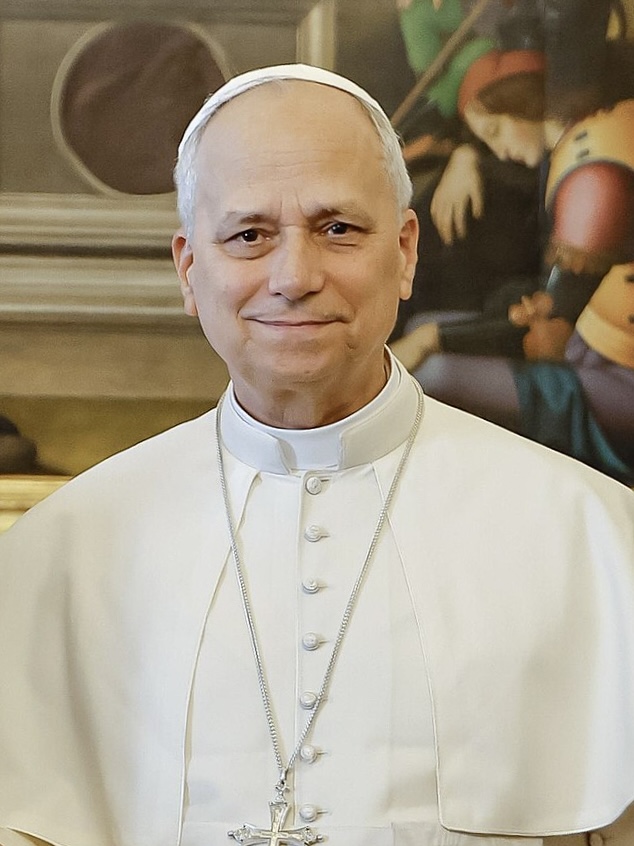
Being a public figure or leader comes with immense responsibility. It also comes with the persistent myth of being a flawless, almost superhuman figure. Public leaders live under constant scrutiny. Their health, habits, decisions, and even personal circumstances often become matters of public interest because of the influence they wield. For Pope Leo, the spiritual leader of more than a billion Catholics, the announcement of his illness naturally raised important questions. Who will be making critical decisions during his absence? What aspects of governance might be affected? How is continuity being assured? Is the institution prepared for such circumstances? These are legitimate concerns that often arise whenever a prominent leader becomes ill.
When Institutions Rise Above Individuals
Like every human being, illness reminds us of our mortality and the limits of human strength. It is perhaps for this reason that respected institutions have often chosen openness when their leaders face health challenges. Pope Francis and Pope John Paul II did so on several occasions. Likewise, in February 2024, Buckingham Palace publicly announced that King Charles had been diagnosed with cancer. While neither the Vatican nor Buckingham Palace claims perfection, both offer valuable lessons in transparency, responsibility, and institutional maturity. Their approach demonstrates that the wellbeing of an institution should never depend entirely on one individual. By communicating openly, they reduce uncertainty and promote public trust.
This lesson is particularly relevant in societies where rumours, misinformation, and speculation thrive, often because official communication channels remain closed or ineffective. Transparent leadership helps prevent the spread of falsehoods and reassures citizens during periods of uncertainty.
If such respected institutions believe openness is necessary, perhaps the same principle should apply more broadly in political leadership. Too often, information regarding the health of national leaders remains scarce or shrouded in secrecy. Such silence creates fertile ground for speculation, exaggeration, and fear, sometimes leading citizens to imagine worst-case scenarios.
Transparency Builds Trust and Confidence
Holding public office does not strip leaders of their right to privacy. Medical confidentiality remains an important and legitimate right. However, citizens do not always require access to every medical detail. What they deserve are basic facts about a leader’s condition and, where necessary, a general indication of how official responsibilities will be managed during periods of treatment or recovery.
Problems arise when managing appearances becomes more important than communicating the truth. Some institutions appear reluctant to acknowledge that a leader is receiving treatment or temporarily unable to perform certain duties. Yet safeguarding personal privacy and providing factual public information are not mutually exclusive.
The Vatican has demonstrated that institutions with strong systems, established procedures, and delegated authority can continue functioning effectively even when their leader is unwell. Strong institutions inspire confidence because they are designed to endure beyond the health or presence of a single individual.
Leadership Has the Power to Change Public Attitudes
Another important lesson is that true leadership often requires confronting uncomfortable realities with honesty and courage. Zambia’s first President, Kenneth Kaunda, provided a remarkable example when he publicly announced that his son had died from AIDS in 1986. At a time when stigma and misunderstanding surrounded the disease, his openness delivered a powerful message to the nation. Influential leaders who speak responsibly about health challenges can encourage citizens to seek medical attention early, confront harmful misconceptions, and foster a culture of honesty. Leadership is not only about governing; it is also about shaping attitudes and inspiring healthier societal norms.
Why Some Leaders Hide Illness and How That Can Change
Oxford University Associate Professor Miles Tendi once observed that many politicians feel compelled to project an image of strength at all times. As he noted, “You can’t show weakness or vulnerability.”
This perception helps explain why some leaders may be reluctant to disclose health challenges. In many political environments, illness is often viewed as a sign of weakness rather than a natural human experience.
The case of Tanzania’s President John Magufuli illustrates this dilemma. News of his death came after weeks of public denial regarding his health condition. Similar situations have occurred elsewhere across Africa, where leaders’ illnesses are frequently concealed from the public.
BBC journalist Daniel N. Kupemba has pointed out that in countries with weak political institutions, succession mechanisms are often poorly established. As a result, leaders and their supporters may fear that acknowledging illness could trigger uncertainty, instability, or power struggles.
This reality highlights the need to strengthen institutions rather than rely excessively on individuals. When succession processes are clear, authority is properly delegated, and governance systems are robust, there is less reason to hide the truth.
The Enduring Lesson
Honesty protects both the leader and the nation. Pope Leo’s illness reminds us that leadership is not about appearing invincible; it is about ensuring that institutions remain stable, accountable, and transparent even during moments of uncertainty. The Vatican’s example demonstrates that nations and organisations with strong procedures and effective delegation can continue to function smoothly when leaders fall ill. Ultimately, openness builds trust, strengthens institutions, and reassures citizens that no individual, regardless of stature, is greater than the system they serve.
The Author is a Communications scholar passionate about Governance and Social Justice